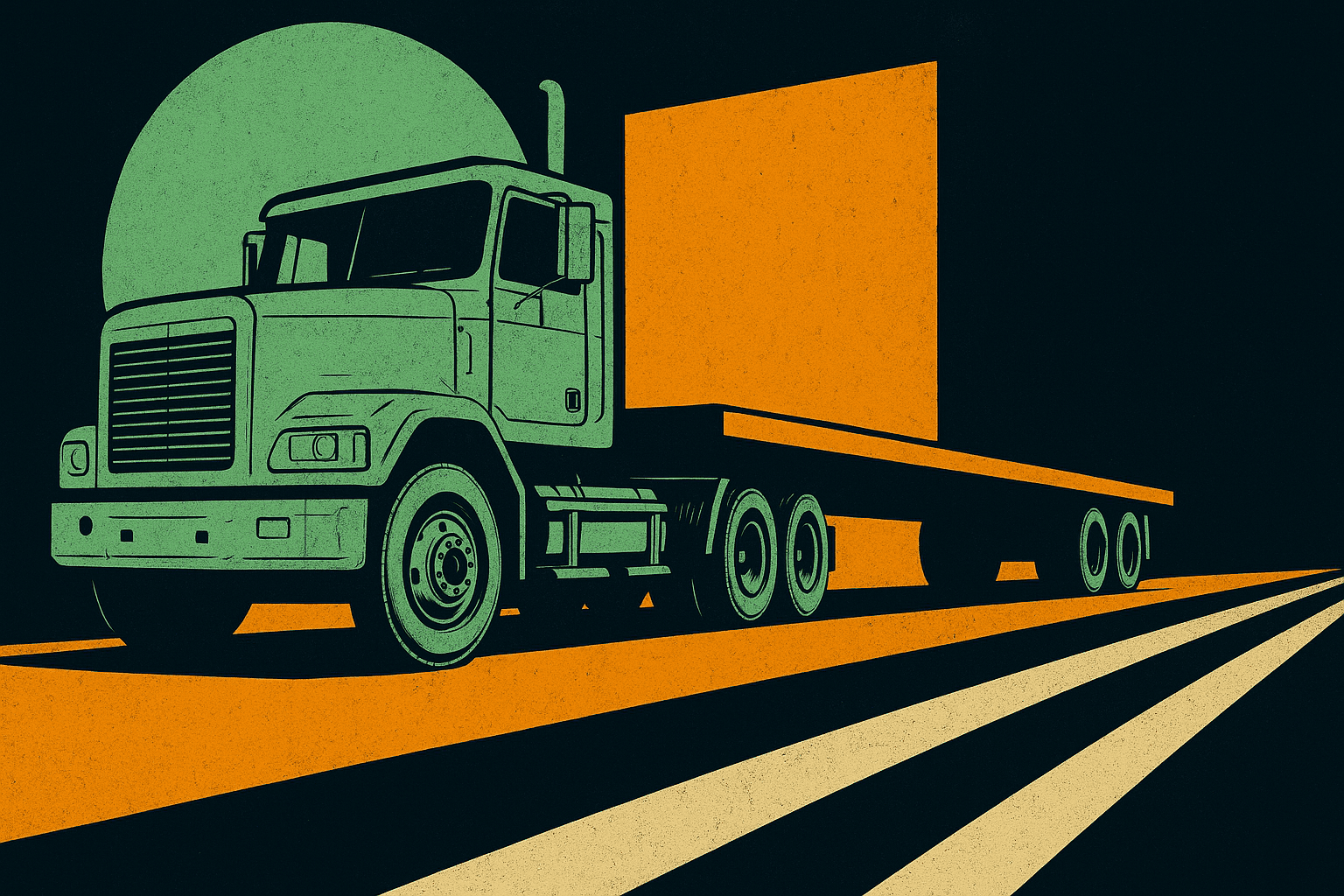
Every reported defect must stay connected to its repair certification and next-driver review. A routine inspection becomes a gap when a tandem dump truck changes projects, a field mechanic completes a repair, and the certification never returns to the original DVIR.
The Federal Motor Carrier Safety Administration (FMCSA) provides no industry-based exemption for construction firms. If the vehicle meets the federal definition of a commercial motor vehicle (CMV) and the operation touches interstate commerce, the driver must conduct the post-trip inspection. Unless an exemption in 49 CFR § 396.11 applies, the driver must also prepare a written report when a defect or deficiency is discovered or reported. Vocational trucks that qualify as commercial motor vehicles face the same federal requirements.
That handoff requires the signed report to move from the driver to the carrier or authorized repair agent, then to the next driver before dispatch. The sections below define the report, explain the post-trip and pre-trip duties, and trace the defect, certification, signature, and retention workflow for paper and electronic records.
What Is a DVIR?
DVIR stands for Driver Vehicle Inspection Report, the report a commercial motor vehicle driver prepares at the end of each day's work when a defect or deficiency is discovered or reported. It documents the condition of the vehicle and any trailer it pulled.
The report lists any defect or deficiency that would affect safe operation or cause a mechanical breakdown, and the driver signs it. FMCSA guidance confirms no specific form is mandated; any format is acceptable as long as it contains the required information and signatures.
A DVIR involves three parties: the driver who prepares and signs it, the motor carrier that must act on any listed defect, and the next driver who reviews it before pulling out. For a construction fleet, "motor carrier" means you.
The obligation applies to a qualifying concrete-pump truck or fuel-and-lube truck operating on public roads. A crane carrier also generates the obligation when it qualifies as a commercial motor vehicle. It sits alongside the broader set of driver qualification records FMCSA expects a motor carrier to keep current for each driver.
DVIR Requirements Under FMCSA (49 CFR § 396.11 and § 396.13)
The two daily handoff sections of 49 CFR Part 396 assign responsibility for daily FMCSA compliance. Section 396.11 governs the post-trip report, and § 396.13 governs what the next driver must do before operating the vehicle.
What the Driver Must Report in a Post-Trip DVIR
A post-trip DVIR applies when a driver discovers or reports a defect or deficiency. At the completion of each day's work, the driver inspects each vehicle operated. The inspection covers the parts and accessories the regulation lists (the 11 items below).
The report identifies the vehicle. It lists any defect or deficiency the driver discovered or that was reported to them. The defect or deficiency must affect safe operation or result in a mechanical breakdown. If the driver ran a combination, the report covers each towed unit. The driver signs whenever a defect is reported.
What the Next Driver Must Do Before Departure
Before driving, § 396.13 requires the driver to ensure the vehicle is in safe operating condition and to review the most recent DVIR. If defects were noted, the driver signs the report to acknowledge the review and certify that the required repairs were performed.
The No-Defect Exception and the 2014 / 2020 Rule Changes
Drivers of property-carrying CMVs do not file a DVIR on days when no defect or deficiency is discovered or reported. FMCSA's 2014 final rule removed that no-defect paperwork requirement. One caveat matters for built-world fleets. Drivers must still inspect the vehicle on no-defect days without filing no-defect paperwork.
Who Is Not Required to File a DVIR
Check the three § 396.11 exemptions before treating a vehicle as outside the filing requirement. They cover private motor carriers of passengers (nonbusiness), driveaway-towaway operations where the vehicle itself is the cargo, and motor carriers operating only one CMV.
Most construction fleets fit none of these categories. A firm running a single water truck might qualify under the one-vehicle exemption, but the moment a second CMV joins the fleet, the duty attaches.
The 11 Required DVIR Inspection Items
These 11 parts and accessories are the minimum DVIR inspection scope under § 396.11. A roadside inspector checks these systems along with other vehicle and cargo-related requirements, so the daily walkaround checklist supports your defense against an out-of-service order.
Service brakes, including trailer brake connections
Parking brake
Steering mechanism
Lighting devices and reflectors
Tires
Horn
Windshield wipers
Rear vision mirrors
Coupling devices
Wheels and rims
Emergency equipment
For vocational trucks, a few of these deserve extra attention. That includes coupling devices on lowboy combinations, wheels and rims on dump trucks running loaded on quarry roads, and lighting on mixers where concrete splatter takes out reflectors.
Defect Reporting, Repair Certification, and the Signature Chain
When a defect is listed, keep every action on the same DVIR. Before the vehicle is operated again, the motor carrier or its agent must repair any listed defect or deficiency likely to affect safe operation and certify on the report that every listed defect was repaired or that repair was unnecessary. Place that certification on the document the driver signed. The next driver then reviews and signs the report.
FMCSA guidance covers the road-call scenario. For an en-route repair, either the driver or a commercial repair facility may certify. That matters for construction fleets whose service trucks handle field repairs at remote sites. A field mechanic may certify on the DVIR when acting as the motor carrier's authorized agent.
The chain breaks when certification never reaches the original report or the next operator misses the review. The first gap implicates § 396.11; the second implicates § 396.13. Digital workflows do not change these responsibilities. Like maintenance completion records more broadly, a repair certification only holds up if it stays attached to the specific unit and inspection it closes out.
DVIR Record Retention and Audit Readiness
When configuring record retention, separate DVIRs from roadside and annual inspection records. FMCSA sets a different clock for each, and mixing them up is how fleets end up purging documents an auditor will ask for.
Document | Retention period | Governing section |
|---|---|---|
DVIR (with certification and signatures) | 3 months from the report date | § 396.11(a)(4) |
Roadside inspection report | 12 months from the inspection date | § 396.9 |
Annual (periodic) inspection report | 14 months from the report date | § 396.21 |
For audit readiness, cross-check DVIRs against repair records and flag missing certifications, reviews, or retention gaps before a review turns them into findings; the same discipline covered in FMCSA audit preparation. Document control matters as much as inspection discipline because the repair certification must remain on file with the DVIR.
When project records do not reconcile, Datagrid's Audit Agent can verify project files against defined audit requirements and route missing certifications or retention gaps for exception handling. Carrier representatives still define the applicable requirements and decide whether each DVIR record is complete.


What Is an eDVIR? The 2026 Electronic DVIR Rule
An eDVIR applies when an electronic workflow can preserve the same required information, signatures, and retention controls as paper. On February 19, 2026, FMCSA published a final rule. Effective March 23, 2026, the rule explicitly permits electronic creation and maintenance of inspection records under 49 CFR 390.32. Electronic DVIRs were already widely used; the rule removes ambiguity about whether an electronic record and signature satisfy Part 396.
DVIR is the regulatory document itself. eDVIR is its digital version. EVIR (electronic verified inspection report) is a vendor category used outside FMCSA's regulatory terminology. It describes systems that verify the driver physically visited each inspection zone, typically by scanning tags mounted on the vehicle.
An EVIR system can produce a compliant eDVIR, and the verification layer is an optional product feature. The 2026 eDVIR rule clarified electronic records; the workflow still needs proper configuration.
Annual Vehicle Inspection vs. DVIR vs. Roadside CVSA Inspection
The three inspection regimes in Part 396 each keep separate records because each has independent requirements. A clean annual vehicle inspection report still requires all daily-report obligations. Commercial Vehicle Safety Alliance (CVSA)-certified enforcement personnel conduct roadside inspections.
| DVIR (§ 396.11) | Annual/periodic inspection (§ 396.17) | Roadside inspection (§ 396.9) |
|---|---|---|---|
Who performs it | The driver | A qualified inspector | Enforcement personnel (CVSA-certified) |
Frequency | After each day's work when a defect or deficiency is discovered or reported | At least once every 12 months | At the inspector's discretion |
What it produces | Signed driver report with defect list | Inspection report and required proof of inspection, which may include a decal | Roadside inspection report; possible out-of-service order |
Retention | 3 months | 14 months (§ 396.21) | 12 months |
The annual inspection certifies the vehicle passed a qualified inspection on one date. A DVIR documents reported defects and their disposition between annual inspections; on no-defect days, the inspection may produce no DVIR. A roadside inspection may verify vehicle condition and applicable inspection documentation. Whichever record an auditor pulls, it needs to hold up as part of the same audit-ready documentation an FMCSA review will expect to see.
DVIR for Construction and Built-World Fleets
A construction-specific DVIR workflow matters most when fleets mix assets, intermittent drivers, project transfers, and field mechanics. Inspection programs often fail on job sites rather than in terminals under these conditions.
Dual Compliance With FMCSA DVIR and OSHA Pre-Shift Inspections
One asset may require separate FMCSA and OSHA records. Crane inspection records may also apply. A crane truck may answer to all three regimes. This applies to an asset that drives on public roads and operates on a covered off-highway construction site not open to public traffic.
FMCSA requires the DVIR under § 396.11. OSHA § 1926.601(b)(14) separately requires covered vehicles operating within an off-highway construction jobsite not open to public traffic to be checked at the beginning of each shift to confirm safe operating condition. Repair defective equipment before use. Cranes add the § 1926.1412 inspection layer. The FMCSA report is post-trip, and the OSHA check is pre-shift, so one form rarely produces both records cleanly.
We recommend an asset-by-asset compliance matrix: for each vehicle class, list which regimes apply and which record proves each one. Pre-shift walkaround photos can contribute to the record when reviewed, linked to clear findings, and routed into the same defect workflow as the DVIR.
When project teams need to analyze those photos, videos, or drawings for jobsite hazards, Datagrid's Site Safety Agent can identify hazards and produce field-ready findings for qualified-person review. A qualified person still has to inspect the truck and decide whether a condition belongs on the DVIR.
Dual compliance also requires consistent instructions for completion, escalation, and storage. When those instructions vary across job sites, Datagrid's SOP Agent can review the fleet's SOPs to flag gaps, compliance risks, and improvement priorities. The electronic form still has to distinguish the FMCSA post-trip record from the OSHA pre-shift record while connecting defects that affect the same asset.
Roadside Audit Risk for Vocational Vehicles
Brake inspection discipline is the place to start roadside-risk controls for vocational trucks. Dump trucks and concrete-pump trucks get pulled into roadside inspections like any other CMV, and so do crane trucks, and the numbers are moving the wrong way.
During CVSA's 2026 International Roadcheck, inspectors conducted 54,575 inspections across North America and placed 19% of vehicles out of service, with brake-related violations accounting for 39.1% of vehicle OOS violations. The 2025 Roadcheck (56,178 inspections) produced an 18.1% vehicle OOS rate. That same enforcement pressure drives roadside inspection management.
Construction fleets carry a specific handicap here. Many of the people driving these trucks are equipment operators who drive intermittently. Full-time drivers run a pre-trip inspection every morning by habit, while intermittent drivers need deliberately built inspection discipline, driver by driver.
Moving the Defect-to-Repair Workflow From Paper to Digital
A digital defect workflow earns its place when paper reports routinely stall between the vehicle, project, and shop, a pattern every equipment manager recognizes. Forms ride in glove boxes, and defects never reach the shop. Records can't be produced when asked. Paper can break the regulated handoff between defect reporting and documented return to service.
When field crews record an equipment issue in the daily report, preserve the context and keep that report separate from the regulated DVIR. Datagrid's Daily Log Agent can capture daily work activity and generate a complete, structured daily report, but the driver must still complete the applicable DVIR and signature chain.


Timely defect routing can improve maintenance planning and deliver measurable cost benefits. A 2026 Fleetio benchmark report found scheduled service should optimally account for 70% of shop work, while respondents averaged only 53.7%.
Plan for mixed-fleet data constraints. Different original equipment manufacturer (OEM) systems can provide data at different frequencies, and ISO/TS 15143-3 omits DVIR defect record standardization, so mixed-fleet telematics leaves the DVIR loop open on its own.
Mine operators also answer to the Mine Safety and Health Administration's (MSHA's) separate surface examination requirements, which carry their own one-year retention rule. Keep those records distinct and capture the defect at the machine before the detail is lost.
Where connectivity is unavailable, projects require offline capture with reliable synchronization once connectivity returns. A workable digital workflow also needs:
Clear asset identifiers
Role-based signature controls
Repair-status tracking
Audit-ready storage
Integrations with the maintenance and project-record systems already in use
AI agents should preserve what the field person saw and flag incomplete documentation. Operators, mechanics, and carrier representatives retain responsibility for the inspection, repair decision, certification, and sign-off. Project teams focus on exceptions that require judgment.
Equipment Transfer Inspections Across Rental, Lease, and Owned Assets
Every asset transfer is an inspection-responsibility handoff. Rentals make it ambiguous; rental companies' inspection and documentation policies vary widely, and when a rented on-road CMV operates under your authority, the DVIR obligation is yours regardless of what the rental agreement says about maintenance.
Condition documentation at pickup and return establishes the DVIR baseline and helps settle damage disputes. A rented CMV may also enter your program with no digital baseline, so the pickup inspection has to establish one.
Moving equipment between projects adds a separate securement obligation. The lowboy driver's DVIR covers the truck and trailer; separately, the driver must check the load because 49 CFR § 393.130 sets the securement requirements for heavy vehicles and machinery. The DVIR and cargo-securement checks can share an operational workflow, but they remain separate regulatory obligations, and both can produce violations for vocational combinations.
Technician Shortage and Defect Prioritization
Out-of-service risk should drive defect prioritization when technician capacity prevents same-day repairs. In the Associated General Contractors' (AGC's) and National Center for Construction Education and Research's (NCCER's) 2025 workforce survey, 79% of firms that employ mechanics reported they are hard to find, and 45% of firms experienced project delays tied to workforce shortages.
That constraint puts defect prioritization at the center of the workflow. When every reported defect can't be repaired same-day, the queue has to be ordered by out-of-service risk, with brakes first. The DVIR record must identify deferring a minor item as a certified decision that it did not affect safe operation. It must also distinguish that decision from a backlog.
Automate DVIR Compliance Tracking With Datagrid's Agentic AI
Datagrid's AI agents reconcile DVIRs, repair certifications, and retention records across the vehicle, project, and shop systems a construction fleet already runs, so carrier representatives spend their time on the defects and exceptions that need a decision:
Certification and signature-chain verification: Compare each DVIR against its repair certification and next-driver review, and flag a report where the certification never reached the original document.
Retention and audit readiness: Cross-check DVIRs, roadside inspection reports, and annual inspection reports against their separate retention clocks and surface missing certifications or retention gaps before a review does.
Defect-to-repair routing: Capture a field-reported equipment issue in the daily report and route it into the same defect workflow as the DVIR, without merging the two records.
Fleet SOP review: Compare completion, escalation, and storage instructions across job sites and flag gaps between the FMCSA post-trip record and the OSHA pre-shift check on dual-compliance assets.
Drivers, mechanics, and carrier representatives keep every inspection, repair decision, and certification; the agents keep the underlying records reconciled and current.
Get started with Datagrid to compare one fleet's DVIR log against its repair certifications and see which records have an open gap.
Frequently Asked Questions About DVIR Compliance
These are the questions fleets ask most about penalties, ELD and hours-of-service interaction, insurance, and hazmat or passenger-CMV edge cases.
What Are the Penalties or Legal Consequences for Failing To Complete or Retain DVIRs Properly?
FMCSA civil penalties for DVIR violations run up to $1,584 per day per missing report, capped at $15,846. Knowingly falsifying a DVIR carries the same maximum. Violations add Compliance, Safety, Accountability (CSA) severity points, driving Safety Measurement System (SMS) scores that trigger audits and roadside scrutiny. Missing certifications or retention gaps discovered during compliance reviews escalate investigations. Unreported defects that contribute to crashes increase carrier liability exposure.
How Does DVIR Interact With Other Compliance Requirements Like ELDs and Hours-of-Service Rules?
DVIRs document vehicle condition; electronic logging devices (ELDs) track driving time and duty status under hours-of-service (HOS) rules. Both are independent federal requirements, but many compliance platforms link them operationally. A driver can be HOS-compliant yet unable to dispatch if a DVIR defect requires repair. Integrated systems route unresolved DVIR defects to maintenance while attaching related HOS records for a unified audit trail, simplifying enforcement review and fleet oversight.
How Do Insurance Companies View DVIR Compliance When Assessing Fleet Risk and Premiums?
Insurers use DVIR compliance as an indicator of fleet safety and recordkeeping discipline. Consistent inspection records suggest defects are caught before crashes, which can support better underwriting terms. Missing or falsified DVIRs signal higher risk and weaker claim defensibility. Strong DVIR discipline demonstrates risk management, while poor compliance can raise premiums because it increases the likelihood of undetected mechanical failures and regulatory penalties.
What Special DVIR Considerations Apply to Hazardous Materials Transport or Specialized Equipment?
Hazmat-placarded vehicles require additional DVIR elements beyond standard inspections. Drivers must verify correct placards are visible, confirm hazmat shipping papers and emergency response information are on board, check packaging shows no leaks or damage, and ensure required emergency equipment such as fire extinguishers and spill kits are present and serviceable. Inspections should confirm drivers follow segregation rules for mixed loads and hold current hazmat endorsements matching the class transported.
How Does DVIR Differ for Passenger-Carrying CMVs Compared With Other Commercial Vehicles?
Passenger-carrying CMVs transport more than eight passengers for compensation or more than fifteen regardless of compensation. Both passenger and property CMVs inspect daily and file a written DVIR only when they discover defects. Property carriers gained no-defect relief in 2014; passenger carriers received similar relief in 2020. Passenger operations often face stricter operational expectations and may inspect safety-sensitive items like emergency exits, seats, and wheelchair lifts.