
Overview
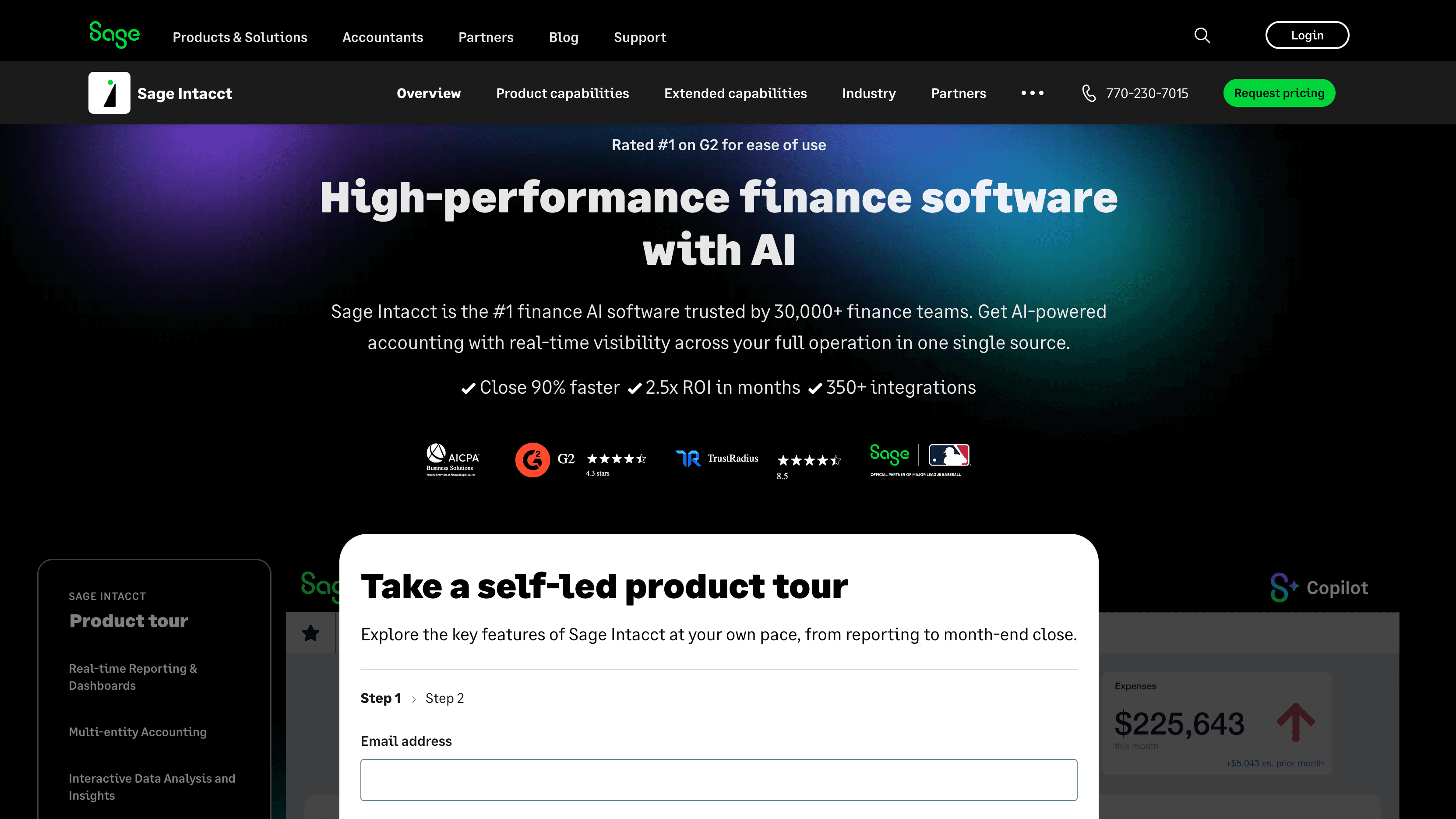
What is Sage Intacct: Sage Intacct is a cloud-based accounting and financial management platform owned by Sage Group. It serves finance teams at growing organizations, with particular depth in multi-entity consolidation, project accounting, and job costing.
How to integrate Sage Intacct with Datagrid
This integration pulls financial and construction data from Sage Intacct into Datagrid for processing by AI agents. The setup centers on creating the right Sage Intacct credentials, validating the connection in Datagrid, and confirming which data objects Datagrid ingests.
Create credentials
Set up access in Sage Intacct first, then enter the same credentials in Datagrid.
In Sage Intacct:
Log in and locate your Company ID under Company > Company > General Information
Create a Web Services user: go to Company > Admin > Web Service Users, set user type to Business with Full admin privileges
Create a Role with List or View permissions for each application you want Datagrid to read from. Assign that role to the Web Services user
Add Datagrid to your Web Services authorization list: go to Company > Setup > Company > Security tab > Web Services Authorizations. Add the Sender ID
ToricMPP(capital T) and set it to Active
In Datagrid:
Go to Integration > Finance > Sage Intacct > Setup Integration
Create a new connection. Fill in four fields: Integration Name, Company ID, User ID, User Password
Click Validate Configuration. A green indicator means success. Red indicates invalid fields
Click Add Configuration
Use these fields when you create the connection in Datagrid:
Connector Name: Sage Intacct - Finance
Company ID: your-company-id
User ID: your-web-services-user
User Password: your-user-password
This setup gives Datagrid the credentials it needs to start incremental ingestion from Sage Intacct.
Authenticate the connection
Sage Intacct uses an XML Web Services authentication model for this integration. The connection requires two layers: a Sender ID credential authorized at the company level, plus a dedicated Web Services user with a Company ID, User ID, and password. Datagrid handles session management automatically after the initial credential validation. The most important setup check is confirming that both the Sender ID authorization and the Web Services user are configured correctly.
Review sync coverage
After authentication succeeds, review what Datagrid ingests and how the sync runs.
Sync direction: One-way (Sage Intacct → Datagrid)
Sync method: Incremental ingestion
Supported endpoints:
General Ledger (6): Account Balances, Accounts, Budgets, General Ledger Details, Journal Entries, Trial Balances
Accounts Payable (3): AP Payments, Bills, Vendors
Accounts Receivable (5): AR Advances, AR Aging, AR Payments, Customers, Invoices
Purchasing (1): Purchasing Transactions
Construction (10): Accumulation Types, AP Retainage Releases, Change Request Status, Change Requests, Cost Types, Tasks, Labor Class/Shift/Union, Project Change Orders, Project Contracts, Project Estimates
Additional endpoints can be requested through Datagrid's support team.
Why use Sage Intacct with Datagrid
Connecting Sage Intacct to Datagrid gives finance leaders and project teams a live financial data layer for agentic AI workflows. Instead of moving records through exports and spreadsheets, operators running mission-critical workflows can route current ERP data directly into execution.
AI agents work directly on financial data: Datagrid agents read GL details, AP bills, AR invoices, and vendor records to cross-check, validate, and flag issues without manual exports or spreadsheet manipulation.
Built-world financial depth out of the box: Ten construction-specific endpoints, including project contracts, change orders, cost types, and project estimates, give job costing data directly to agents that compare estimates against actuals.
Incremental ingestion keeps data current: The integration pulls only changed records on each sync, so agents operate on current financial information without full data reloads.
Multi-entity visibility in one place: Datagrid ingests data across Sage Intacct entities, giving AI agents a consolidated view of GL balances, AR aging, and vendor activity across your organization.
10-minute setup, no custom code: Four credential fields and a Sender ID whitelist entry connect Sage Intacct to Datagrid. No XML serialization, session management, or SDK installation is required on your side.
What you can build with Sage Intacct and Datagrid
Sage Intacct gives Datagrid access to ledger, payables, receivables, purchasing, and built-world records that operators already rely on to run critical workflows. That creates room for agentic AI workflows that analyze transactions, compare records across modules, and route exceptions to the right people. The examples below show how teams can apply those records inside Datagrid:
Automated AP bill validation against project budgets: Datagrid agents ingest AP bills and project estimates from Sage Intacct's construction module, then cross-reference bill amounts against approved budget lines.
Multi-entity trial balance reconciliation: For organizations running dozens of entities, Datagrid agents pull trial balances across all entities and compare them period over period.
AR aging analysis with customer risk scoring: Datagrid ingests AR aging data, customer records, and invoice history from Sage Intacct.
Construction change order impact analysis: Agents pull project contracts, change requests, and project change orders from Sage Intacct's construction endpoints.
Resources and documentation
Sage Intacct REST API getting started for the current recommended API surface
Sage Intacct XML requests reference with request structure for authentication and function calls
Sage Intacct XML API FAQ covering pagination, date formats, multi-entity queries, and common integration issues
Sage Intacct XML Web Services guide for the XML API authentication model
Sage Intacct API sessions documentation for the
getAPISessionflow.
Frequently asked questions
What authentication does the Datagrid Sage Intacct integration use?
The integration uses Sage Intacct's XML Web Services authentication flow. Sage Intacct XML requests require sender credentials plus company or session authentication. In Datagrid, you provide your Company ID, Web Services User ID, and password, while Datagrid manages the sender credential layer internally. You must also whitelist Datagrid's Sender ID (ToricMPP) in your Sage Intacct company's Web Services Authorizations settings.
What data can Datagrid pull from Sage Intacct?
Datagrid supports 25 read-only endpoints covering General Ledger, Accounts Payable, Accounts Receivable, Purchasing transactions, and 10 construction-specific objects. The full endpoint list appears in the data sync section above.
Can Datagrid write data back to Sage Intacct?
Currently, the Datagrid integration supports one-way incremental ingestion only (Sage Intacct → Datagrid). Sage Intacct itself exposes multiple API surfaces, and the documentation linked in this page includes object documentation for APIs such as the AP Bills API. Contact Datagrid to request write-back endpoints for specific use cases.
How does the integration handle multi-entity Sage Intacct companies?
The integration ingests data associated with the Company ID and Web Services user permissions you configure. In multi-entity setups, the Web Services user's assigned roles and entity access determine which entity data flows into Datagrid. Review the Sage Intacct Web Services request structure documentation for details on how locationid and entity access interact with API calls.
Do I need to install anything to connect Sage Intacct to Datagrid?
No. The connection is configured entirely through the Datagrid web interface and the Sage Intacct admin console. You create a Web Services user, whitelist the Sender ID, and enter credentials in Datagrid. The full setup process is documented in the Datagrid Sage Intacct integration guide and takes about 10 minutes.
Similar integrations
Oracle Netsuite: Common alternative cloud ERP used for comparisons, migrations, and multi-ERP consolidation projects alongside Sage Intacct deployments.
QuickBooks: Frequently a predecessor or SMB accounting source that organizations migrate from or sync with Sage Intacct for consolidation.
Stripe: Payment processor whose transactions and payouts are often synced into Intacct to automate AR posting and cash reconciliation.
Salesforce: CRM source for customers, opportunities, and order-to-cash workflows that drive invoice creation and revenue recognition in Intacct.
Snowflake: Data warehouse target for exporting GL, trial balances, and DDS extracts to run analytics, reporting, and AI models on Intacct data.
Amazon AWS S3: Cloud storage destination for Intacct DDS bulk exports and ETL staging before loading financial data into warehouses or analytics pipelines.
Browse by category
Financial
ERP